
Which ALTA Table A Items Do You Actually Need?
 You finally found the right commercial property. The price feels fair. The location works for your plans. Then your lender sends over something called the ALTA Survey Table A checklist, a list of 20 optional survey items you have probably never seen before.
Now you are stuck with questions.
Do you check every box just to be safe? Do you leave it up to the lender? Or do you guess and hope nothing important gets missed?
Many buyers do one of those things, and it often leads to problems later. Some pay for survey items they never needed. Others miss important details involving easements, zoning, parking, or flood risks that slow down closing or create expensive problems after the deal is done.
Table A is not just paperwork. It is the part of the ALTA survey that helps uncover problems before money changes hands.
Most commercial properties need ALTA Survey Table A Items 1, 2, 3, 4, 6(a), 11(a), 19, and the new 2026 Item 20. Other items depend on the property type, flood risk, wetlands, utilities, parking, and lender rules. Choosing the right items helps avoid delays, extra costs, and last-minute surprises.
What Is the ALTA Survey Table A Checklist?
The ALTA Survey Table A checklist is a list of optional survey items added to a standard ALTA/NSPS Land Title Survey. Buyers, lenders, attorneys, and title companies use these items to look for risks tied to zoning, utilities, parking, easements, wetlands, flood zones, and encroachments before closing.
An ALTA/NSPS Land Title Survey is one of the most detailed surveys used in commercial real estate. It follows national standards used across the United States.
Every ALTA survey already includes a basic scope. That basic survey usually covers:
- Boundary lines
- Easements
- Access points
- Property dimensions
- Visible improvements
Table A adds extra items beyond the standard survey. These extra items help buyers and lenders look deeper into the property before closing.
That is why lenders often ask for certain Table A items during commercial real estate deals.
A basic ALTA survey usually costs between $2,500 and $4,000, depending on the property size and complexity. Adding Table A items can raise the cost to $3,000 to $6,000 or more.
Understanding which items you actually need can help protect your budget and your closing schedule.
What Changed in the 2026 ALTA Survey Standards?
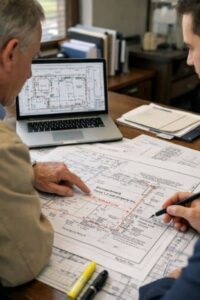 The 2026 ALTA/NSPS standards added a new Item 20 that requires surveyors to provide a formal encroachment summary table directly on the survey. This update helps lenders and title companies spot property conflicts more clearly before closing.
On February 23, 2026, ALTA and the National Society of Professional Surveyors updated the official survey standards.
The biggest change was the addition of Table A Item 20.
Before this update, surveyors often used simple notes like:
“No encroachments found unless shown hereon.”
That wording sometimes caused confusion because different people interpreted it differently.
Under the 2026 standards, surveyors must now provide a clear encroachment summary table directly on the survey.
The table may include:
- Boundary overlaps
- Easement conflicts
- Setback violations
- Shared access problems
- Encroachments involving buildings or improvements
This gives lenders, title companies, and buyers a much clearer picture of the property.
If your checklist only includes 19 items, you may be using an outdated form.
Which Table A Items Are Usually Required for Commercial Properties?
Most lenders financing commercial property require core Table A items that confirm property boundaries, zoning compliance, utilities, visible improvements, and encroachments.
Commonly Required Table A Items
- Item 1: Property corner monuments
- Item 2: Address confirmation
- Item 3: Land area calculations
- Item 4: Improvements and visible site features
- Item 6(a): Zoning classification and setbacks
- Item 11(a): Above-ground utilities
- Item 19: Surveyor professional liability insurance
- Item 20: Encroachment summary table
Why These Items Matter
Item 1 – Property Corner Monuments
This item places or confirms physical markers at the property corners. These markers help identify the legal property boundaries.
Item 2 – Address Confirmation
This confirms the property address matches the legal records tied to the property.
Item 3 – Land Area Calculations
This measures the total size of the property. Buyers and lenders use this information to confirm acreage and development space.
Item 4 – Improvements and Visible Features
This item identifies major improvements on the property, including:
- Buildings
- Parking lots
- Sidewalks
- Signs
- Canopies
- Retaining walls
For most commercial properties, this item is very important.
Item 6(a) – Zoning Information
This item identifies:
- Zoning classification
- Building setbacks
- Parking rules
- Height restrictions
This matters because zoning rules can change depending on the location within Palm Beach County.
A property allowed for one use in West Palm Beach may not qualify for the same use in another nearby city.
Item 11(a) – Above-Ground Utilities
This item identifies visible utilities such as:
- Utility poles
- Transformers
- Utility boxes
- Overhead power lines
Lenders usually require this item for developed commercial sites.
Item 19 – Professional Liability Insurance
This item confirms the surveyor carries professional liability insurance during the project.
This protection can help if a survey mistake creates financial problems later.
Item 20 – Encroachment Summary Table
The new Item 20 provides a clear summary of:
- Encroachments
- Easement conflicts
- Setback issues
- Shared access concerns
This item is becoming standard for many commercial lenders.
Which Table A Items Depend on the Property Type?
Some Table A items only make sense for certain types of commercial properties. The right items depend on the location, property conditions, and future development plans.
Item 5 – Elevations and Contours
Item 5 matters for properties:
- Near the Intracoastal Waterway
- Inside FEMA flood zones
- On undeveloped land
- In drainage-sensitive areas
South Florida may look flat, but even small elevation changes can affect:
- Flood insurance
- Drainage
- Site grading
- Future construction
According to FEMA flood maps, many coastal areas in Palm Beach County fall within Special Flood Hazard Areas where elevation information becomes more important.
Item 9 – Parking Counts
Item 9 is important for:
- Retail properties
- Restaurants
- Office buildings
- Mixed-use developments
Palm Beach County zoning rules often require a certain number of parking spaces based on how the property will be used.
Parking problems discovered after closing can create issues with permits or tenant leases.
Item 10 – Drainage Structures
This item identifies:
- Drainage systems
- Swales
- Retention ponds
- Stormwater structures
Drainage easements are common in South Florida and may not always appear obvious during a site visit.
Item 11(b) – Underground Utilities
If construction is planned, Item 11(b) may also be needed.
This item identifies underground utilities through utility records and coordination with utility companies.
Underground utility checks can increase survey turnaround time because surveyors must work with outside agencies.
Item 16 – Wetlands Evidence
Item 16 is important for properties:
- Near water
- Near canals
- Near conservation areas
- West of I-95
- On undeveloped land
Wetland problems discovered late in the process can affect:
- Building permits
- Development approvals
- Construction costs
- Site planning
Item 17 – Offsite Easements
This item identifies easements or shared access tied to nearby properties, including:
- Shared driveways
- Cross-parking agreements
- Utility easements
This is common along older commercial areas like Dixie Highway and Federal Highway.
Which Table A Items Can Usually Be Skipped?
Some Table A items only apply to special situations. Buyers should confirm these items are truly needed because unnecessary items increase survey costs and turnaround time.
The following items are often situation-specific:
- Item 7: Exterior building dimensions
- Item 8: Interior floor area
- Item 12: Additional utility observations
- Item 13: Names of adjoining owners
- Item 14: Distance to nearest intersecting street
- Item 15: Evidence of earth movement
- Item 18: Additional negotiated requirements
In many commercial transactions, these items are not required unless specifically requested by:
- The lender
- A government agency
- An attorney
- A redevelopment consultant
Before adding extra items, ask whether they are actually necessary for the transaction.
How Do You Order an ALTA Survey Correctly?
Commercial buyers can avoid many ALTA survey delays by making sure the lender, title company, attorney, and surveyor are all working from the same information before the survey begins.
Follow these steps before ordering the survey:
- Send the title commitment early. Surveyors should receive the title commitment before starting the project.
- Request the correct survey standard. Always ask for:
“2026 ALTA/NSPS Land Title Survey” - Confirm the Table A checklist with everyone involved. The lender, title company, attorney, and surveyor should all review the same checklist.
- Verify lender requirements early Some lenders ask for additional zoning, parking, or utility items.
- Avoid using older surveys. Surveys completed before February 23, 2026 may not meet current standards.
Commercial redevelopment continues to grow throughout Palm Beach County, which has increased demand for updated ALTA surveys that meet modern lender requirements.
Frequently Asked Questions
What is the ALTA Survey Table A checklist?
The Table A checklist contains optional survey items added to an ALTA/NSPS Land Title Survey based on lender requirements and property risks.
Which Table A items are required for most commercial properties?
Most commercial properties commonly require Items 1, 2, 3, 4, 6(a), 11(a), 19, and 20.
What is Item 20 in the 2026 ALTA standards?
Item 20 is the new encroachment summary table added to the 2026 ALTA/NSPS standards.
Does every property need wetlands or flood-related Table A items?
No. Wetlands and elevation items depend on the location, flood zone, and development plans.
Can I use an older ALTA survey completed before 2026?
Some lenders and title companies may reject older surveys because they do not meet the updated 2026 standards.
For a free land surveying quote, call us at (561) 220-7505 or send us a message by going here.
Posted in land surveying, land surveyor |