
Property Survey Cost Factors for Large Residential Corner Lots
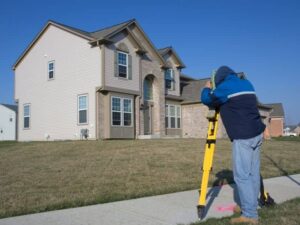 Corner lots come with a certain appeal. More frontage, more light, sometimes a bigger yard. They also come with a survey bill that tends to run higher than a standard interior lot, and most homeowners don’t find out why until the invoice arrives.
The short answer is that corner lots involve more boundary lines, more research and often more field time. A quarter-acre interior lot might have four corners and two adjoining neighbors. A large corner lot can involve two street frontages, additional right-of-way research and more complex setback rules, all of which add to the scope of work.
If you’re budgeting for a property survey cost on a corner lot in West Palm Beach, here’s what actually drives the price and how to plan for it.
Why Corner Lots Can Require More Survey Fieldwork
A corner lot borders two streets instead of one, and that lot configuration means the surveyor has to locate and verify boundary lines along two public rights-of-way instead of just one. That extra frontage adds real time to the fieldwork.
Interior lots typically share property lines with two or three neighboring parcels. Corner lots often border two streets, one or two neighbors, and sometimes a drainage or utility easement running along the side yard. Each of these lines needs to be researched, measured and marked.
In older West Palm Beach neighborhoods, right-of-way widths and lot configurations were sometimes platted decades ago and don’t always match current field conditions. Corner recovery can add time when surveyors must locate or reestablish older monumentation and compare it with the recorded plat. A surveyor working a corner lot has to reconcile those records with what’s actually on the ground, which takes more time than a straightforward interior lot with clean, well-documented lines.
How Lot Size and Boundary Complexity Affect Survey Cost
Larger lots generally cost more to survey because there’s more ground to cover and more boundary line to measure. This is one of the most direct cost drivers, and it applies whether the lot is a corner parcel or not.
Boundary complexity adds another layer on top of size. A large corner lot with irregular boundary angles, a curved street frontage, or gaps between the recorded plat and physical evidence in the field takes longer to resolve than a simple rectangular lot with matching records.
Factors that typically increase cost on larger or more complex lots include:
- Total lot acreage and perimeter length
- Number of boundary corners and angle points
- Curved or irregular lot lines, common on corner parcels near intersections
- Discrepancies between the deed, the recorded plat and physical monuments found in the field
- Heavy vegetation or fencing that slows access to boundary lines
A surveyor can’t give an accurate property survey cost without knowing these details up front, which is why quotes based only on square footage or a general address are rough estimates at best.
Reviewing Street Rights-of-Way and Corner Setbacks
Street rights-of-way define how much of your lot near the road is actually usable, and corner lots involve two of them instead of one. This directly affects both survey scope and how much buildable area your property actually has.
Right-of-way widths vary by street classification and are set by the City of West Palm Beach or Palm Beach County, depending on the road. A survey identifies exactly where the right-of-way ends and your private property begins along both street frontages, which is something a tax map or GIS parcel viewer won’t show accurately.
Corner setback rules add another layer. Many municipalities apply different setback requirements to corner lots than interior lots, particularly along the secondary street frontage, to preserve sightlines at intersections. These rules can affect where you’re allowed to build a fence, addition or accessory structure.
How Existing Improvements Can Increase Survey Complexity
Existing structures, fences, pools and driveways on a corner lot add time to a survey because each one has to be located and checked against the boundary lines and setback requirements. This is especially relevant for larger properties that have accumulated additions over the years.
A corner lot that’s changed hands multiple times may have a fence that was never surveyed in, a pool addition built without updated documentation, or a driveway that encroaches on the right-of-way. All of these need to be field-located and shown on the final survey.
Common site conditions that add complexity on corner lots in this area include:
- Pools, screened enclosures or detached structures near the boundary
- Fencing that doesn’t align with the recorded property line
- Driveways or walkways that cross into the right-of-way
- Drainage swales or retention areas tied to the secondary street frontage
- Mature trees or landscaping that limit direct sightlines between monuments
The more improvements on the lot, the more the surveyor has to document, which is a direct factor in the final property survey cost.
What to Provide Before Requesting a Survey Estimate
Give the surveyor your most recent deed, any prior survey you have and a general description of the property before asking for a quote. This lets them scope the job accurately instead of guessing.
Useful information to have ready includes:
- A copy of your current deed or the parcel identification number
- Any existing survey, even an older one
- The reason for the survey, such as a sale, permit, fence installation or boundary question
- Whether the property has a pool, additions or other improvements near the boundary
- Your general timeline, especially if it’s tied to a closing date or permit deadline
Survey costs can vary by property type, lot configuration, project scope and the surveyor’s current workload, so treat any quote given without this information as a rough placeholder. If your timeline depends on a closing, permit or construction start date, request the survey early rather than assuming it can be turned around quickly.
Frequently Asked Questions
Do corner lots always cost more to survey than interior lots?
In most cases, yes, because there’s typically more boundary line, more right-of-way research and often more corners to locate. The exact difference depends on lot size, complexity and existing improvements, so it’s worth getting a specific quote rather than assuming a fixed markup.
How much does a property survey cost in West Palm Beach?
Cost depends on lot size, boundary complexity, existing improvements and the type of survey needed. A surveyor can give an accurate figure once they know your parcel details and the reason for the survey.
Will a survey show if my fence is on the right-of-way?
Yes, a boundary survey identifies the right-of-way line along both street frontages and can show whether existing fencing, landscaping or structures encroach on it.
Do I need a new survey if I already have one for this property?
It depends on the age of the survey and whether anything has changed since it was completed. If you’ve added a pool, fence or structure, or if the existing survey is several years old, a title company, lender or permitting office may require an updated one.
How long does a corner lot survey typically take?
Timelines vary based on lot complexity, records research and current scheduling, but corner lots with more boundary lines and existing improvements often take longer than a standard interior lot. Build in extra lead time if your project depends on a specific closing or permit date.
For a free land surveying quote, call us at (561) 220-7505 or send us a message by going here.
Posted in land surveying, land surveyor | Tagged cost of land surveying, estimating the cost of land surveying, land surveying cost, land surveying cost West Palm Beach